 QRJiffy
What Is a QR Code?
A QR code (Quick Response code) is a two-dimensional matrix barcode that stores text, links or other data in a square grid of dark and light modules, readable by any smartphone camera. Denso Wave invented it in 1994, and it is standardised as ISO/IEC 18004.
Updated · QRJiffy team
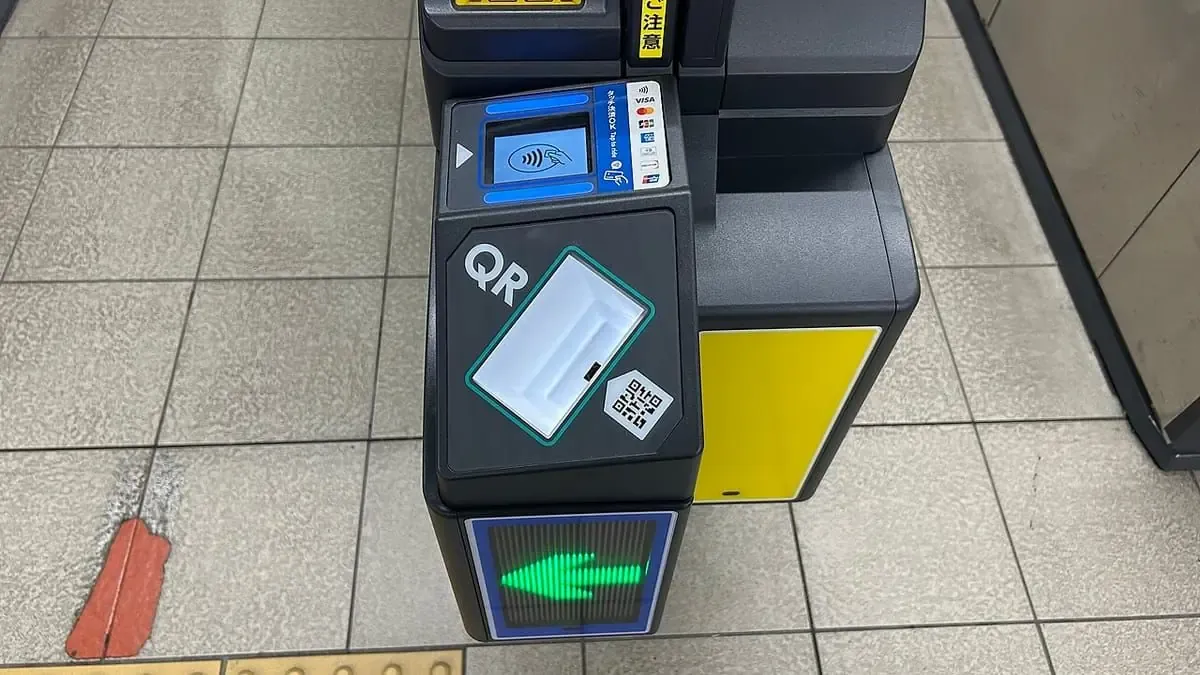
What does QR code stand for?
QR code stands for “Quick Response code”, a name chosen because the code was designed for high-speed decoding. Denso Wave built it so factory scanners read a label in a fraction of a second. “QR Code” is a registered trademark of Denso Wave, but the technology is free to use.
Who invented the QR code?
Masahiro Hara and his team at Denso Wave, a Toyota group company, invented the QR code in 1994 to track car parts. Linear barcodes held only about 20 characters and read in one direction. The team designed a square code that held kanji, read from any angle and decoded quickly. Denso Wave chose not to enforce its patent, and the code became the international standard ISO/IEC 18004 in 2000. Apple added QR scanning to the iPhone Camera in iOS 11 (2017).
What are the parts of a QR code?
A QR code is made of function patterns that help the scanner find and align the grid, plus data and error-correction modules that carry the content. Each part has a fixed job:
| Part | What it looks like | What it does |
|---|---|---|
| Finder patterns | Three 7 × 7 squares in the top-left, top-right and bottom-left corners | Tell the scanner where the code is and which way up it is, so it reads at any angle |
| Separators | A one-module white border around each finder pattern | Keep the finder patterns distinct from the data |
| Timing patterns | Alternating black/white lines between the finder patterns | Let the scanner calculate module size and grid position |
| Alignment patterns | Small 5 × 5 squares (version 2 and above) | Correct for distortion when the code is curved or photographed at an angle |
| Format information | 15 bits beside the finder patterns | Records the error correction level and the mask pattern used |
| Version information | Two 6 × 3 blocks (version 7 and above) | Records the version number of large codes |
| Data and error-correction codewords | The remaining modules | Carry the content plus Reed–Solomon recovery data |
| Quiet zone | A blank margin, 4 modules wide | Separates the code from surrounding graphics so the scanner can find its edges |
Before the code is drawn, one of eight mask patterns is applied to the data area. The mask breaks up large solid areas and patterns that look like finder patterns, which makes the code easier to scan.
What is a QR code version?
A QR code version is its grid size: version 1 is 21 × 21 modules and each version adds 4 modules per side, up to version 40 at 177 × 177 modules. A generator picks the smallest version that fits your data at the chosen error correction level, so more data means a denser code.
| Version (grid) | Error correction | Numeric | Alphanumeric | Bytes |
|---|---|---|---|---|
| 1 (21 × 21) | L | 41 | 25 | 17 |
| 1 (21 × 21) | H | 17 | 10 | 7 |
| 10 (57 × 57) | L | 652 | 395 | 271 |
| 40 (177 × 177) | L | 7,089 | 4,296 | 2,953 |
| 40 (177 × 177) | H | 3,057 | 1,852 | 1,273 |
Version 40 codes exist on paper but are impractical to print small. A typical web link of 30–60 characters produces a version 3–5 code, which scans instantly from a business card.
How does a QR code encode data?
A QR code encodes data in one of four modes — numeric, alphanumeric, byte or kanji — and the mode determines how many bits each character takes. Numeric mode packs three digits into 10 bits, alphanumeric mode packs two characters into 11 bits, byte mode uses 8 bits per byte (UTF-8 text, links, vCards), and kanji mode uses 13 bits per double-byte character.
Almost everything people share — URLs, contact cards, WiFi QR codes — is stored in byte mode. A single code can switch modes mid-stream to save space, for example storing a long number in numeric mode inside a byte-mode message.
What can a QR code store?
A QR code can store any text up to its capacity, and phones act on that text according to its format. A string starting with https:// opens a browser, WIFI: joins a network, BEGIN:VCARD saves a contact, mailto: starts an email and BEGIN:VEVENT offers to add a calendar event. QRJiffy offers 41 types of QR codes, each built on one of these payload formats or on a hosted page.
How do QR codes work?
QR codes work by storing data in a grid that a phone decodes by finding the three finder patterns, sampling the grid, removing the mask and correcting errors with Reed–Solomon codes. The steps take a fraction of a second:
- The camera image is converted to black and white and searched for the 1:1:3:1:1 ratio of the finder patterns.
- The scanner corrects perspective using the finder and alignment patterns and maps every module to the grid.
- It reads the format information to learn the error correction level and mask, then unmasks the data.
- Reed–Solomon decoding repairs damaged or missing codewords, and the data is decoded into text.
- The phone recognises the payload format and offers the matching action, such as opening a link.
For a hands-on walkthrough on each operating system, see how to scan a QR code.
Can a QR code point to a short link instead of the content?
Yes, a QR code can store a short link on a QR service, which forwards each scan to the real destination. The short link makes the pattern sparser and lets the service count scans and change the destination later. The code then depends on the service staying active. Do QR codes expire? explains what that means in practice.
Why does a QR code still scan when part of it is damaged?
A QR code survives damage because it carries Reed–Solomon error-correction data that rebuilds 7% to 30% of the codewords, depending on the level chosen. This redundancy is what lets designers place a small logo in the centre of a code. The QR code error correction guide explains how to pick a level.
Generate a free QR code in seconds, with PNG or SVG download, using the QRJiffy QR code generator.
Frequently asked questions
Can QR codes expire?
No, the QR code pattern itself never stops being readable. A code that stores a link works as long as the link is online; a code made through a QR service works as long as that service’s plan stays active.
Is it free to get a QR code?
Yes, creating a QR code is free, and Denso Wave charges no licence fee for using the technology. Paid QR services charge for scan allowances, editing and scan analytics.
What is the difference between a barcode and a QR code?
A barcode stores a short number in bars read along one axis; a QR code stores up to 4,296 characters in a grid read along two axes. A QR code is a two-dimensional member of the barcode family.
Why should we be careful in using QR codes?
People must be careful because a QR code hides its destination until it is scanned. Scammers use codes to send people to fake login or payment pages, so check the link preview before you tap it.
What is the QR code on my phone?
The QR code on your phone is a sharing code generated by an app, such as a WhatsApp contact, an Instagram profile or a saved WiFi network. Another phone scans it to open the same thing.
Sources
- ISO/IEC 18004:2024 — QR Code bar code symbology specification — ISO
- What is a QR Code? — DENSO WAVE (QRcode.com)
- History of QR Code — DENSO WAVE (QRcode.com)
- Information capacity and versions of QR Code — DENSO WAVE (QRcode.com)
- QR Code standardization — DENSO WAVE (QRcode.com)
- About the patent — DENSO WAVE (QRcode.com)